Trump Calls for Ukraine's President to Be Replaced as Washington Eases Pressure on Russia
As Russia continues bombing Ukrainian cities, Donald Trump is calling for new leadership in Kyiv, lifting restrictions on Russian diesel exports, and warning Ukraine against attacking Russian oil infrastructure.
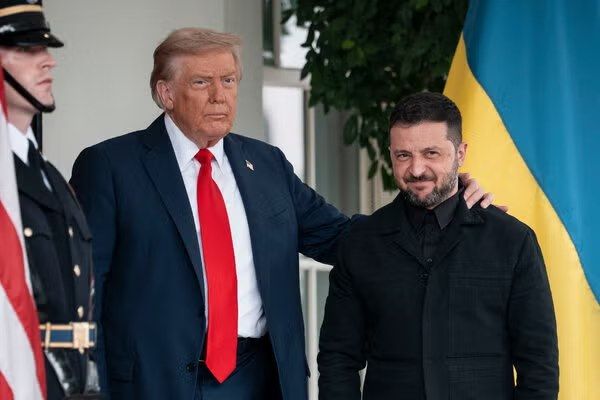
President Donald Trump has taken his confrontation with Ukraine to a new level.
The orange dictator is abandoning Ukraine, completely.
On Saturday, Trump publicly called for Ukrainian President Volodymyr Zelenskyy to be replaced, arguing that Ukraine needs "someone willing to negotiate an agreement with Russia."
The remarks came just one day after Trump announced an agreement with Russian President Vladimir Putin to ease sanctions on Russian diesel exports.
The developments raise serious questions about the direction of American foreign policy, particularly whether Washington is increasingly prioritizing economic cooperation with Moscow over pressure on Russia to end its invasion.
Trump Wants a New Ukrainian President
Speaking to reporters Saturday, Trump suggested that Zelenskyy had repeatedly failed to reach an agreement to end the war.
"I think it's time for Ukraine to get a new president," Trump said.
He accused Zelenskyy of refusing opportunities to negotiate with Russia and argued that another Ukrainian leader might be more willing to reach an agreement.
These are extraordinary remarks from an American president about the leadership of a country defending itself against a foreign invasion.
Ukraine is a sovereign nation. Its political leadership is a matter for Ukrainians to determine, not the president of the United States.
Trump's statements do not establish that Washington has launched an operation to remove Zelenskyy. But they do represent direct political pressure on Ukraine's leadership at an especially vulnerable moment.
The distinction matters.
Calling for a foreign president to be replaced is not the same as implementing regime change. Nevertheless, Trump's comments introduce the question of whether continued American support is becoming increasingly conditional on Ukraine accepting Washington's preferred negotiating terms.
A Deal With Putin While Ukrainian Cities Burn
The timing of Trump's remarks is particularly significant.
On Friday, Trump announced an agreement with Putin that would permit Russian diesel exports despite sanctions intended to restrict Moscow's energy revenues.
The administration says the arrangement is designed to address rising fuel prices, which have been affected by the ongoing conflict involving Iran.
But the economic implications extend far beyond American fuel costs.
Russian energy exports generate revenue for Moscow, and European governments have repeatedly argued that restricting those revenues is essential to limiting Russia's ability to finance its invasion.
Then, on Saturday, Russian attacks killed at least 20 people in the Ukrainian city of Zaporizhzhia, including three children.
According to Reuters, the attacks struck residential buildings, leaving families buried beneath rubble.
The sequence of events has intensified criticism of Trump's approach.
Washington eased economic pressure on Russia. Moscow continued its attacks. And Trump publicly demanded different leadership in Ukraine.
That sequence does not establish that the American decision caused the attacks. Russia has been bombing Ukrainian cities throughout the war.
It does, however, expose the central concern surrounding the administration's policy: whether reducing pressure on Moscow without obtaining meaningful concessions weakens the incentive for Russia to negotiate.
Ukraine Is Being Told to Stop Fighting Back Against Russian Oil Infrastructure
Trump has also intensified criticism of Ukrainian strikes against Russian oil refineries.
Those facilities are economically important to Moscow, and Ukraine has targeted them as part of its campaign to weaken Russia's ability to sustain the war.
Trump argues that the attacks contribute to global fuel shortages and increase costs for American farmers and consumers.
According to reporting from Axios, a U.S. official said the administration had repeatedly requested that Ukraine stop striking Russian refineries before Trump reached his diesel agreement with Putin.
Ukraine has proposed a reciprocal arrangement: Kyiv would stop attacking Russian energy infrastructure if Moscow stopped attacking Ukrainian power facilities.
That distinction is critical.
Ukraine is seeking mutual restraint. The Trump administration, according to the U.S. official's account, wanted Ukraine to stop its attacks without requiring the same commitment from Russia.
The result is a fundamental dispute over whose military and economic actions Washington is prepared to tolerate.
Zelenskyy Pushes Back
Zelenskyy has sharply criticized Trump's agreement with Putin.
In an interview with Axios, the Ukrainian president described the sanctions decision as unfair and dishonest.
He also warned that easing economic pressure on Russia could strengthen Moscow's ability to continue its military campaign.
The Ukrainian government has consistently argued that Russia must face sufficient economic and military pressure to negotiate seriously.
Trump's administration offers a different argument, maintaining that pressure on Ukraine to compromise could help bring the conflict to an end.
But the unresolved question is what kind of agreement would emerge from that pressure, and whether Ukraine would retain meaningful control over its own security and territorial future.
An agreement reached under pressure is not automatically a durable peace.
And a settlement that fails to address the causes of Russia's invasion could leave Ukraine vulnerable to future attacks.
The Question of Ukrainian Sovereignty
There is another issue that cannot be ignored.
Ukraine's presidential elections have been postponed under wartime martial law, which restricts the holding of national elections.
The postponement has been politically controversial, but it does not give a foreign government the authority to select Ukraine's leadership.
Trump's call for a replacement president therefore raises a basic question about national sovereignty.
If Washington believes Ukraine needs different leadership to negotiate peace, where does that leave the principle that Ukrainians should determine their own government?
The United States can negotiate its own foreign policy, decide what assistance to provide, and advocate for diplomatic settlements.
But Ukraine's presidency belongs to Ukraine.